Silver Tubes is a known manufacturer of Stainless Steel 316L Pipe Fittings, which is generally considered to be weldable by the common fusion and resistance. The more highly reducing environments in Stainless Steel 316L Butt Weld Pipe Fittings such as boiling dilute hydrochloric and sulfuric acids are shown to be too aggressive for these materials. Stainless Steel 316L Butt Weld Fittings is even used for in systems to clean up the exhaust gases from cars and power stations. SS 316L Pipe Fittings are covered by a variety of specifications and codes relating to, or regulating, construction or use of equipment manufactured from these alloys for specific conditions. In SS 316L Butt Weld Pipe Fittings, pitting and crevice corrosion can occur in environments containing chlorides. The strip sections in SS 316L Butt Weld Fittings may be air cooled, but heavy sections should be water quenched to minimize exposure in the carbide precipitation region.
Alloy 316L Pipe Fittings is a much better option in operating temperature environments in excess of 500 Degree C and therefore has its own merits. Lower carbon in Type 316L Pipe Fittings minimizes chromium carbide precipitation due to welding and its susceptibility to intergranular corrosion. In many instances, Grade 316L Pipe Fittings can be used in the as-welded condition, while Grade 302 must be annealed in order to retain adequate corrosion resistance.316L Stainless Steel Pipe Fittings find its applications in industries, such as chemical, fats & fertilizer, sugar mills & distilleries, cement, ship builders, paper, pumps, petrochemicals and oil & natural gas.
Why Choose Stainless Steel 316L Pipe Fittings?
SS 316L pipe fittings outperform 304 and standard 316 grades wherever chlorides, acids, and moisture combine to drive corrosion. Two properties create that gap: molybdenum held at 2 to 3% and carbon capped at 0.03% maximum.
Molybdenum blocks pitting and crevice corrosion directly. Offshore platforms, chemical dosing lines, and coastal water treatment systems treat 316L not as an upgrade but as the baseline specification, precisely because 304 fittings fail there within months.
Low carbon prevents carbide precipitation at weld joints. Standard 316 permits carbon up to 0.08%, which triggers grain boundary attack in the heat-affected zone during welding. At 0.03%, 316L fittings weld cleanly without post-weld heat treatment, cutting fabrication time and preserving corrosion resistance at every joint.
Mechanically, these fittings hold tensile strength above 485 MPa and yield strength above 170 MPa across all standard schedules. For buyers specifying fittings in marine, pharmaceutical, or chemical service, 316L performs where other grades fall short.
Below are important features of Stainless Steel 316L Pipe Fittings explained in detail.
- Corrosion resistance: Withstands chlorides, acids, and alkalis that degrade standard stainless grades within months.
- Weldability: Carbon at 0.03% maximum prevents sensitization and eliminates mandatory post-weld heat treatment.
- Mechanical strength: Sustains tensile strength above 485 MPa and yield strength above 170 MPa in high-pressure service.
- Pitting and crevice resistance: Molybdenum at 2 to 3% blocks localized corrosion mechanisms that attack 304-grade fittings.
- High-temperature rating: Rated for continuous service up to 870°C, conforming to ASME B16.9 pressure standards.
- Dimensional accuracy: Consistent wall thickness and bore dimensions reduce turbulence and leak risk at connection points.
- Construction options: Seamless, welded and fabricated to meet system design and pressure code requirements.
- Size range: Supplied from 1/2" to 48" NB across SCH 10 through SCH 160, per ASTM A403 and MSS SP-43.
- Hygienic finish: Electropolished versions meet 3-A Sanitary Standards for pharmaceutical and food-grade piping.
- Low maintenance: A self-repairing oxide layer extends service life and cuts inspection frequency.
The available types of Stainless Steel 316L Pipe Fittings are listed below in detail.
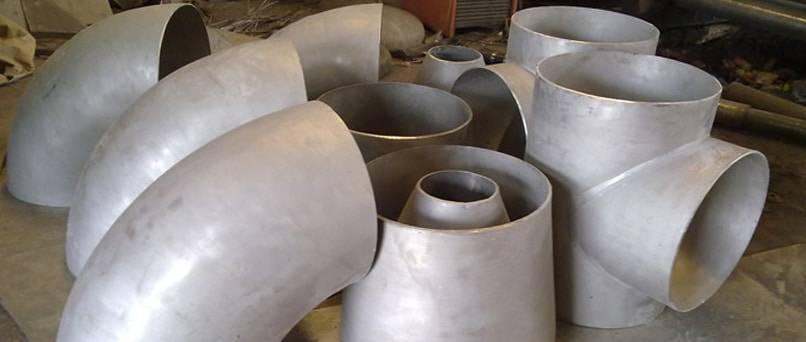
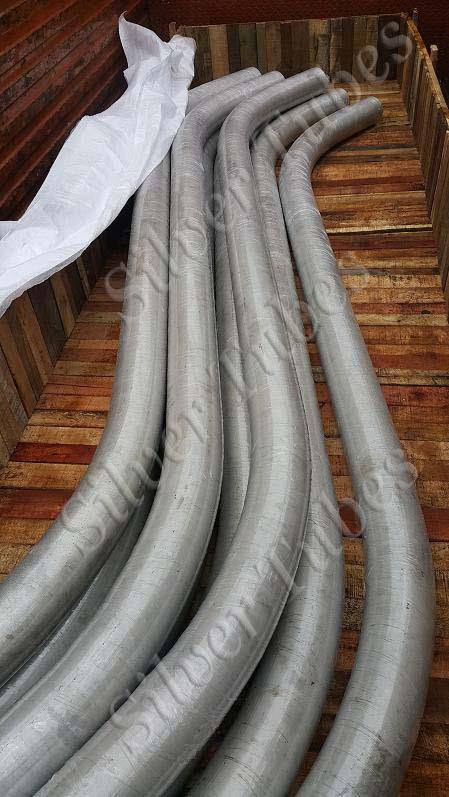
- Elbows redirect flow at 45° or 90°. Long-radius types reduce friction losses; short-radius types suit tight spaces in chemical and offshore installations.
- Tees branch a pipeline into two equal or reduced outlets, used in pharmaceutical process lines and water treatment headers where corrosion resistance at every junction matters.
- Reducers connect pipes of differing bore sizes. Concentric types keep the centerline aligned; eccentric types allow full drainage in horizontal chemical process lines.
- Stub Ends are used with lap joint flanges, they allow the bolt holes to be aligned and rapid dismantling. Often used in offshore and marine systems where downtime is costly.
- Pipe Caps are used to cap off the ends of open pipelines during construction or testing. They are manufactured to ASME B16.9 and carry the same pressure rating as the adjoining pipe.
- Cross Fittings are used to distribute flow from a common body in 4 directions. They are common in fire suppression headers and chemical distribution manifolds.
- Couplings and Unions join pipe sections permanently or allow repeated disassembly, standard in food processing and pharmaceutical lines requiring routine equipment removal.
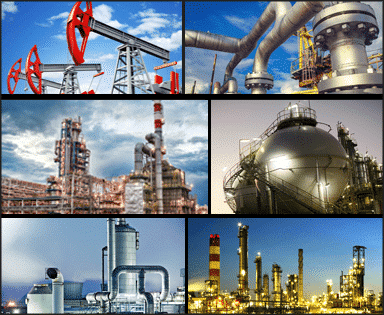
Stainless Steel 316L Pipe Fittings are used in the below mentioned industries that require high-performance and excellent corrosion protection.
- Chemical Industry: Routes acids, solvents, and chlorine-bearing streams without pitting or wall thinning across long production cycles.
- Petrochemical Industry: Handles hydrogen sulfide and chloride-bearing crude fractions under high pressure without stress corrosion cracking.
- Oil and Gas Industry: Resists attack by saltwater chloride in subsea pipelines, wellhead headers and offshore topside systems.
- Marine Industry: Maintains the passive layer in seawater, where 304 fittings corrode through within 12 to 18 months.
- Pharmaceutical Industry: Meets surface requirements of the FDA and cGMP and is resistant to steam sterilization at 134°C in purified water and CIP systems.
- Food Processing Industry: Resists fermentation acids, prevents bacterial adhesion in dairy, juice and beverage processing lines.
- Paper and Pulp Industry: Holds up in bleach circuits where pH swings between 2 and 13 within the same processing loop.
- Power Plants: Performs through thermal cycling between 150°C and 450°C in condensate return and cooling water headers.
- Water Treatment Plants: Resists hypochlorite attack in chlorine dosing lines and high pressure RO reject systems.
| Specifications | ASTM A403 / ASME SA403 |
| Dimensions | ANSI B16.9, B16.25, B16.28, MSS-SP-43, MSS-SP-48, MSS-SP-59 |
| Size | 1/8" NB TO 48" NB. |
| Type | Seamless / Welded(100% X-Ray Welded) / Fabricated |
| Schedule | SCH 5S, 10S, 10, 20, 40S, 40, STD, 60, 80S, 80, XS, 100, 120, 140, 160 & XXS. |
| Bending Radius | R=1D, 2D, 3D, 5D, 6D, 8D, 10D or Custom |
| STANDARD | UNS | WERKSTOFF NR. | AFNOR | EN | JIS | BS | GOST |
| SS 316L | S31603 | 1.4404 / 1.4435 | Z3CND17‐11‐02 / Z3CND18‐14‐03 | X2CrNiMo17-12-2 / X2CrNiMo18-14-3 | SUS 316L | 316S11 / 316S13 | 03Ch17N14M3 / 03Ch17N14M2 |
| Grade | C | Mn | Si | P | S | Cr | Mo | Ni | Fe |
| SS 316L | 0.035 max | 2.0 max | 1.0 max | 0.045 max | 0.030 max | 16.00 - 18.00 | 2.00 - 3.00 | 10.00 - 14.00 | 68.89 min |
| Tensile Strength | Yield Strength (0.2%Offset) | Elongation | Hardness | |
| Rockwell B (HR B) max | Brinell (HB) max | |||
| Psi – 75000 , MPa – 515 | Psi – 30000 , MPa – 205 | 35 % | 95 | 217 |

ANSI B16.25 Stainless Steel 316L Pipe Cap, Stainless Steel 316L Equal Cross, SS 316L Welded Butt weld pipe fittings, AISI 316L SS End Cap, Stainless Steel 316L Long Stub Ends, Stainless Steel 316L Lap Joint Stub End Manufacturer, SS 316L Weldable Elbow exporter in India, Stainless Steel 316L Piggable Bend, ANSI B16.28 SS 316L Short Radius Elbow Supplier in India, 316L SS 90 Degree LR Elbow, 316L Stainless Steel 45 deg SR Elbow, SS 316L Collar, SUS 316L Barrel Nipple, UNS S31603 Stainless Steel 180° Long Radius Elbow, Stainless Steel 316L Butt-Welding Fittings dimensions, DIN 1.4404 / 1.4435 Short Stub End, MSS-SP-48 SS 316L Buttweld Reducer
Atyrau, Colombo, Manama, Nagpur, Perth, Bhopal, Ahvaz, Ranchi, Rajkot, Kolkata, Al Khobar, Ho Chi Minh City, New Delhi, Visakhapatnam, Dammam, Chandigarh, Ernakulam, Ulsan, Port-of-Spain, Vadodara, Hanoi, Vung Tau, Bengaluru, Busan, Granada, Secunderabad, Jamshedpur, Dubai, Caracas, Indore, Bangkok, Riyadh, London, Surat, Chennai, New York, Brisbane, Ahmedabad, Edmonton, Ankara, Ludhiana, Jeddah, Kuwait City, Nashik, Pimpri-Chinchwad, Sharjah, Chiyoda, Jaipur, Hyderabad, Gurgaon, Muscat, Coimbatore, Toronto, Jakarta, Madrid, Cairo, Baroda, Los Angeles, Hong Kong, Lagos, Faridabad, La Victoria, Petaling Jaya, Kanpur, Aberdeen, Calgary, Montreal, Seoul, Bogota, Sydney, Milan, Houston, Santiago, Moscow, Kuala Lumpur, Dallas, Istanbul, Singapore, Courbevoie, Melbourne, Lahore, Pune, Thiruvananthapuram, Tehran, Thane, Navi Mumbai, Karachi, Geoje-si, Gimhae-si, Noida, Abu Dhabi, Mexico City, Haryana, Howrah, Al Jubail, Rio de Janeiro, Doha, Algiers, Mumbai.
Norway, United Kingdom, Peru, Zimbabwe, Brazil, Puerto Rico, Mongolia, Lithuania, Costa Rica, United States, Namibia, Bulgaria, Netherlands, Bolivia, Chile, Finland, Nigeria, Egypt, Hungary, Italy, Denmark, Croatia, Estonia, Bahrain, New Zealand, Lebanon, Yemen, Poland, Argentina, Romania, Macau, Chile, Israel, Spain, Mexico, Libya, China, Algeria, Australia, Tibet, Singapore, Iran, Oman, Azerbaijan, Ukraine, Canada, Portugal, Pakistan, Bangladesh, Ecuador, Serbia, Kuwait, Czech Republic, Mexico, Hong Kong, Switzerland, Jordan, Saudi Arabia, Bhutan, Greece, Germany, India, Turkey, Austria, Iran, Thailand, South Africa, Belgium, Nigeria, Sri Lanka, Ireland, Afghanistan, Philippines, Russia, Kazakhstan, Sweden, Morocco, Kenya, Slovakia, Angola, Indonesia, Venezuela, Japan, Colombia, Nepal, South Korea, Ghana, Malaysia, United Arab Emirates, Iraq, Qatar, Gambia, Poland, France, Belarus, Gabon, Trinidad & Tobago,Tunisia, Taiwan, Vietnam.
316L stainless steel fittings for joining, diverting or sealing pipelines. They are 2-3% molybdenum and conform to ASTM A403 for corrosive industrial service.
Carbon drops from 0.08% to 0.03% maximum. That reduction prevents carbide precipitation at weld joints, removing the need for mandatory post-weld heat treatment.
At 0.03% carbon, chromium carbides do not form at grain boundaries during welding. The weld zone has full corrosion resistance without any further heat treatment steps.
Molybdenum raises the PREN above 24, making 316L reliable in seawater and brine, where 304-grade fittings develop pitting quickly.
Chemical, oil and gas, marine, pharmaceutical, food processing, pulp and paper, power generation, and water treatment plants all specify 316L for corrosive or hygienic service.



 AN ISO 9001:2015 CERTIFIED
COMPANY
AN ISO 9001:2015 CERTIFIED
COMPANY