
A furnace shutdown caused by a cracked nickel alloy line costs more in downtime than the pipe itself ever did. That fact drives most Inconel 600 Pipe decisions in process plants. The alloy holds strength past 1000°C and shrugs off chloride attack that eats through standard stainless in months. Chemical processing and power generation units both lean on it for the same reason: the base metal does not give way when acid streams and thermal cycling hit at once.
What Are Inconel 600 Pipes?
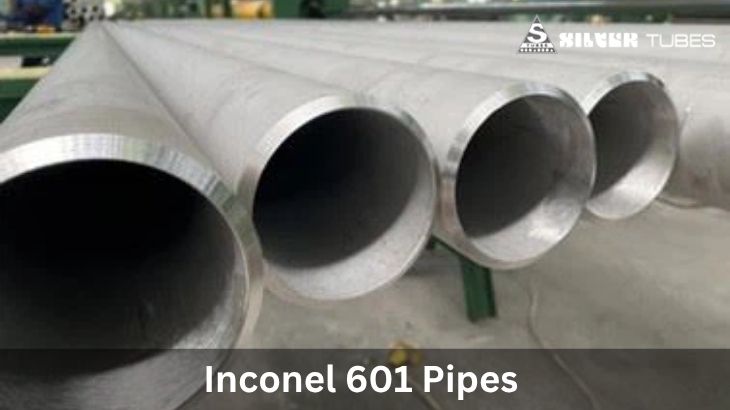
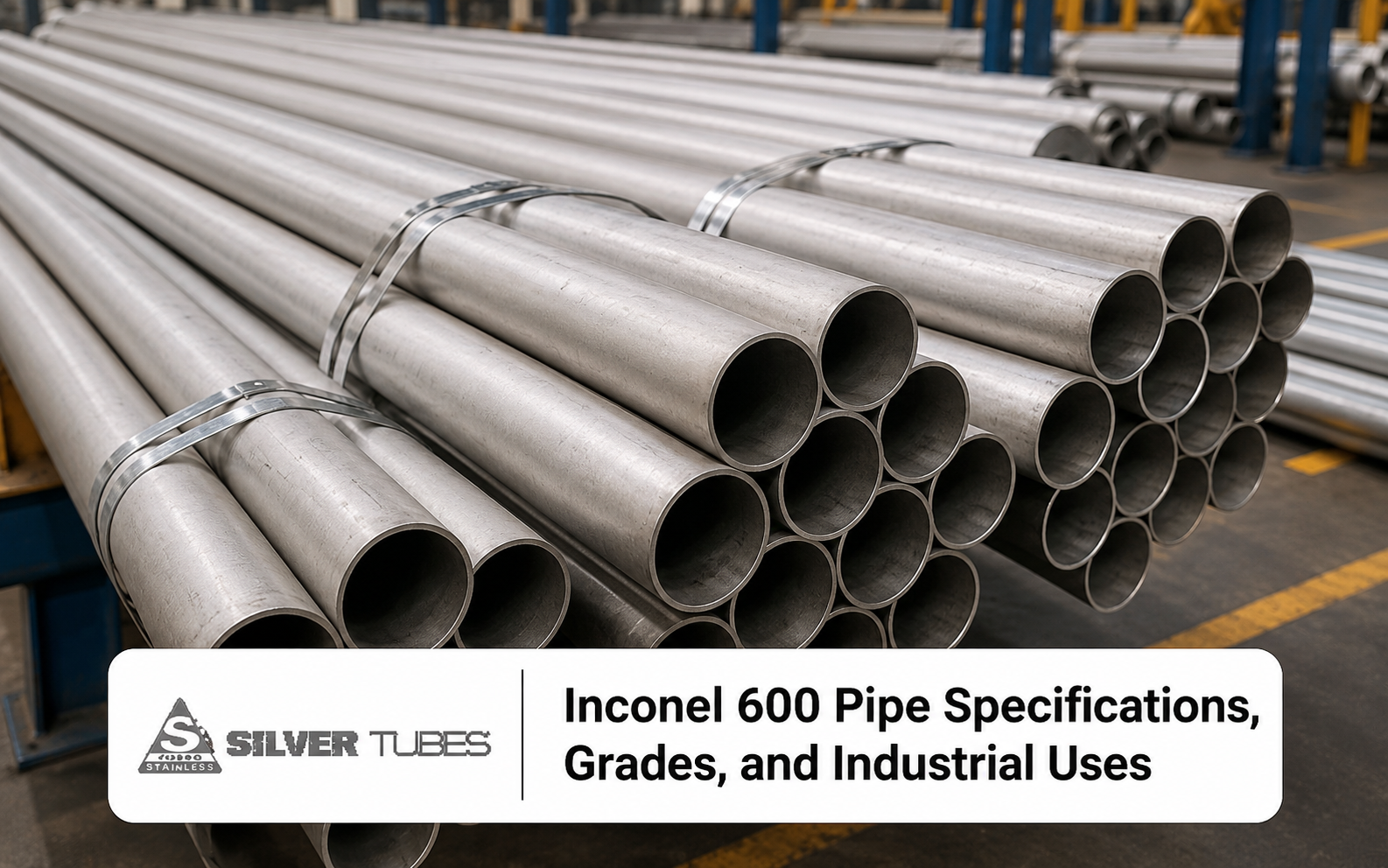
Inconel 600 pipes are made from a nickel-chromium-iron alloy, built around a nickel content above 72%. That base gives resistance to chloride stress cracking that plain austenitic steels cannot match. Chromium at 14 to 17% handles oxidising conditions, while iron adds mechanical stability. Pipe comes seamless or welded, produced to ASTM and ASME forms, and shipped as straight lengths.
Chemical Composition of Inconel 600
Nickel anchors the alloy above 72%. Chromium runs 14 to 17% and does the heavy lifting against oxidation. Iron sits between 6 and 10%. Carbon is capped at 0.15%, manganese at 1.00 %, sulfur under 0.015%. These limits keep grain boundaries clean, resisting intergranular attack.
Mechanical and Physical Properties
Tensile strength sits around 655 MPa, yield strength near 310 MPa, and elongation at 40%. The pipe deforms before it snaps, useful during thermal cycling. Melting point runs to 1413°C, density is 8.47 g/cm³, and welding uses standard nickel filler.
Inconel 600 Pipe Specifications
Specifications cover the standards, the sizes, and how the pipe gets made.
Applicable ASTM and ASME Standards
Seamless pipe follows ASTM B167 and ASME SB167. Welded pipe follows ASTM B517 and ASME SB517, and welded tube under ASTM B516 and ASME SB516. API or nuclear grade work often adds inspection on top of the base standard.
Available Pipe Sizes and Dimensions
Pipes are available from 15 NB up to 600 NB, in schedules from 5S through XXS. Tube sizes go from 1 mm OD to 254 mm OD, with wall thickness between 0.2 and 20 mm, in single random, double random, or cut lengths.
Manufacturing Types
Seamless pipe suits high pressure and cyclic thermal service where a weld seam is a risk point. Welded and ERW pipe cover larger diameters at shorter lead times.
Grades and Variants of Inconel 600 Pipes
Inconel 600, UNS N06600, covers most commercial supply. ‘Solution annealed’ is the standard mill condition, though projects sometimes call for extra testing or tighter tolerance.
Solution-Annealed Inconel 600 Pipes
This is the condition most mills ship as standard, suited to general corrosive and high-temperature piping without added heat treatment.
Custom Specifications for Project Requirements
Dimensional tolerance can be tightened beyond standard mill allowance for critical fit-up work. Surface finish gets specified for polished or sanitary service, with testing added per code requirement.
Key Features of Inconel 600 Pipes
The properties below are why the alloy keeps showing up in the harder corners of a plant.
Resistance to Oxidation and Scaling
High chromium forms a stable oxide layer at elevated temperatures, stopping scale buildup on furnace components over repeated cycles.
Corrosion Resistance Across Chemical Environments
The alloy holds up against caustic solutions, organic acids, and neutral salts at once, cutting the number of materials a plant needs to stock.
High-Temperature Mechanical Strength
Strength holds through 1000°C, so the pipe keeps its load-bearing capacity in furnace tubes and reactor internals.
Chloride Stress Corrosion Cracking Resistance
Nickel above 72% removes the vulnerability that causes chloride cracking in standard stainless, which matters in marine lines.
Long Service Life With Minimal Maintenance
Fewer replacement cycles mean less unplanned shutdown time, and inspection intervals often extend compared to standard stainless.
Industrial Uses of Inconel 600 Pipes
Harsh chemical and thermal conditions are where this alloy earns its cost.
Chemical Processing Industry
Nitric and mixed acid streams run through Inconel 600 lines where standard stainless pits within a season.
Petrochemical and Refinery Plants
High temperature crude and catalytic units use the alloy in reactor piping and furnace tubes.
Heat Treatment and Furnace Equipment
Muffles, retorts, and radiant tubes rely on scale resistance to survive repeated cycling.
Power Generation Facilities
Steam generator piping and reactor components use Inconel 600 where cracking resistance is non-negotiable.
Marine and Offshore Applications
Chloride-heavy seawater lines on platforms benefit from the same resistance that protects nuclear steam systems.
Aerospace and Industrial Manufacturing
Exhaust and high-temperature ducting use the alloy where weight and heat resistance both matter.
How to Select the Right Inconel 600 Pipes
Selection comes down to service conditions matched against the specification sheet, not guesswork.
Temperature and Pressure Requirements
Check design temperature against the alloy’s strength curve, then confirm wall thickness against the pressure rating chosen.
Corrosion Environment Assessment
Map every chemical the pipe will contact, including cleaning agents, since acid service reacts differently under caustic wash cycles.
Compliance with Project Standards
Confirm the governing code, ASTM, ASME, or API, before ordering, and lock in seamless or welded construction based on pressure class.
Advantages of Using Inconel 600 Pipes in Industrial Applications
Reliable Performance Under Extreme Temperatures
The alloy holds mechanical integrity through repeated thermal cycles without the creep failures seen in lower grade materials.
Extended Service Life in Corrosive Environments
Resistance to chloride and oxidizing attack means fewer replacement cycles across a plant’s life.
Reduced Maintenance and Downtime
Longer inspection intervals translate into fewer planned outages.
Fabrication and Welding Characteristics
Standard nickel alloy welding procedures apply, with no special preheat or post-weld treatment typically needed.
Cost-Effective Long-Term Performance
Higher upfront cost gets offset over service life by lower failure rates and fewer shutdowns.
Factors to Consider Before Purchasing Inconel 600 Pipes
Get material certification and full traceability back to the heat number before accepting delivery. Confirm manufacturing quality through mill test reports and third party inspection where the project demands it. Check compliance against the ASTM and ASME edition on the purchase order. Verify dimensional accuracy through inspection reports, not just a mill certificate. Work with a supplier who produces documentation on request.
Conclusion
Specification, grade, and application have to line up before Inconel 600 pipe goes into a project, not after. A pipe rated for one corrosive environment can fail fast in another if the wrong variant gets ordered. Getting the standard, the dimensional class, and the manufacturing type right at the order stage keeps a piping system running without surprise failures. Correctly specified, Inconel 600 pipe remains one of the more dependable choices for high temperature and corrosive service.